01 · On the Water
Gulf Coast Fishing Guide
This is the fishing companion to the boating and waterway guide: licenses, seasons, slot and bag limits, the fish you are most likely to catch, the best spots and public piers, charters, tides and ramps, all Sarasota-first. Rules change every year, so everything below points back to the current official regulations at MyFWC.com.
Fishing Guide Topics
Pair this guide with the community guides for area-specific water access and flavor: Sarasota · Venice · Nokomis · Osprey · Bradenton
Species Library
Gulf Coast Species Library
The species below are the fish most commonly caught from Sarasota Bay to the offshore reefs: identification tips, habits and proven tactics for each. Florida's seasons, slot sizes and bag limits change often, so instead of printing numbers this guide points straight to the current official FWC rules for every species below.
Species to Know
Name-Only Quick JumpTap a name to jump straight to that species' detail section below. Names only: identification, habits and links to the current official rules live in each section.
Every tile jumps to its group or species detail section below. Seasons, sizes and limits change, sometimes mid-year, so always confirm the current rules at MyFWC.com before you keep a fish.
Regulations updated: September 2026. Bag and size limits below are never printed on this page by design: Florida rules change every year and sometimes mid-year, so every species section links to its current official FWC page instead. Always verify the rules there before you keep a fish. The Gag grouper season and the red snapper season, in particular, are reset by FWC every year.
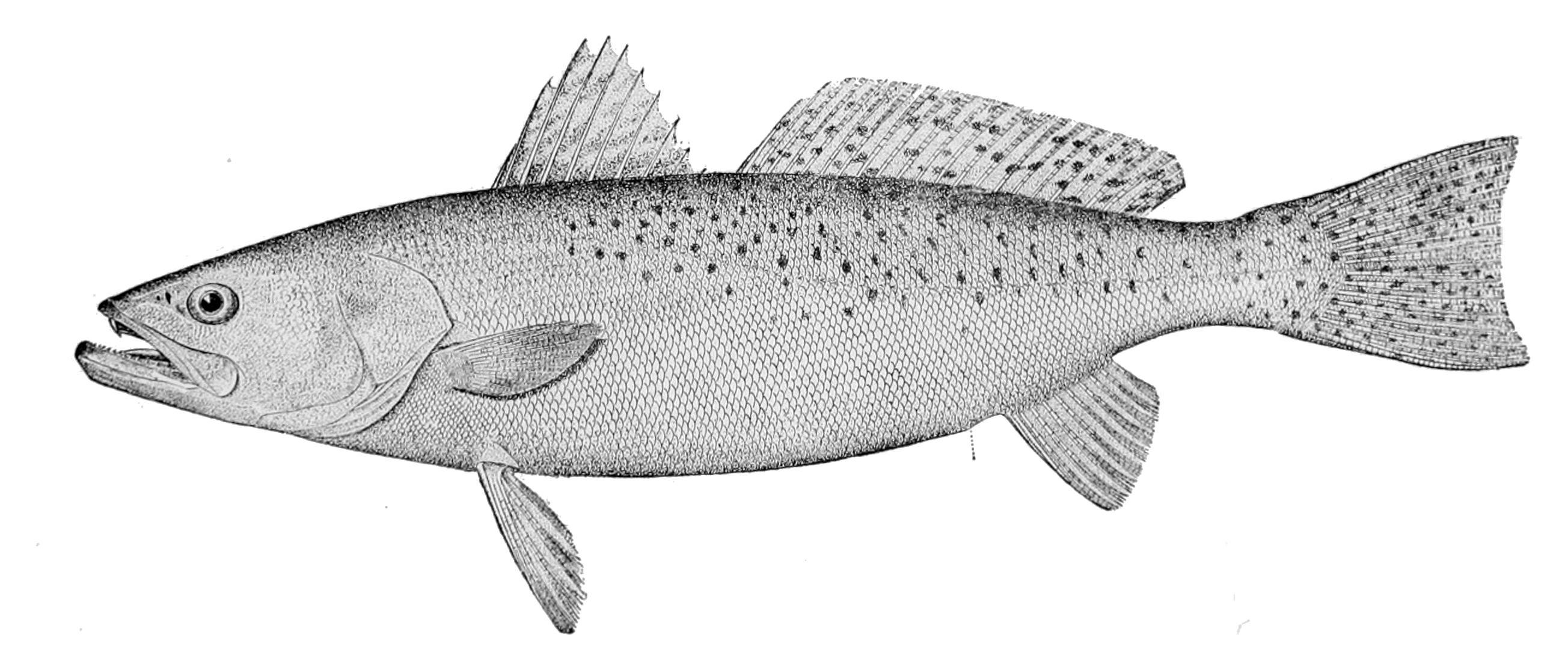 Photo: public domain, via Wikimedia Commons
 Spotted Seatrout
Southwest Region · Sarasota BayElongated, silvery body with a rounded tail and a patch of dark spots along the back and upper sides, with a faint yellowish tip at the mouth. Locals call them specks, and they are the anchor of the Sarasota flats fishery.
- Season
- FWC manages seatrout by region; confirm the current window for the Southwest region
- Slot Limit
- Set by FWC; confirm the current slot before keeping one
- Over-Slot Allowance
- An over-slot allowance can apply; verify the current provision at FWC
- Bag Limit
- Set by FWC; confirm the current bag
- Possession Limit
- Follows the daily bag limit in current FWC rules
- Habitat
- Seagrass flats, sandy potholes, passes, dock lines and bridge pilings from the bays to just offshore
- Gulf / ICW Relevance
- The bread-and-butter inshore fish of Sarasota Bay and the Intracoastal Waterway: caught from wade flats, kayaks, skiffs, piers and docks year-round
- Fishing Methods
- Live shrimp, pinfish or soft-plastic jigs worked slowly across the grass, most reliable at dawn, dusk and around tide changes. No multiple hooks may be used with live or dead natural bait
Photo not available
No confirmed public-domain image for this species
Flounder
Flounder Group · Gulf State WatersFlatfish with both eyes on the left side of the body and a mottled brown-and-tan upper side that disappears into the bottom. Gulf, southern and summer flounder are managed as one species group along the Gulf, so the same rules apply to all of them.
- Season
- Open most of the year with a seasonal closure in Gulf state waters; dates are set each year, so check FWC
- Minimum Size
- Set by FWC; confirm the current minimum
- Bag Limit
- Set by FWC; confirm the current bag
- Possession Limit
- Follows the daily bag limit in current FWC rules
- Habitat
- Sandy and muddy bottoms, seagrass edges, passes and the Gulf surf, usually half-buried just below the surface
- Gulf / ICW Relevance
- Common from Sarasota Bay docks and piers, in the passes and along Gulf beaches; a prime pier and surf target
- Fishing Methods
- Bounced jigs, squid or live bait drifted along the bottom, or gigged at night over shallow flats wherever legal
Photo not available
No confirmed public-domain image for this group
Grouper
Gulf State Waters · Aggregate RuleGroupers are offshore targets toward natural bottom, limestone ledges, wrecks and artificial reefs beyond the passes. Harvest is managed Gulf-wide as a species aggregate, with minimum sizes, bag limits and seasons set and reset by FWC and NOAA, so always confirm the current rules before you leave the dock.
Gag Grouper
Charter FavoriteThe most-sought nearshore-to-mid-depth grouper out of Sarasota and Venice, with heavy dark mottling, strong jaws and a rounded tail.
- Minimum Size
- Set annually by FWC; confirm the current minimum
- Bag Limit
- Set by FWC; confirm the current bag
- Season
- Short annual season set by FWC, typically closed most of the year; confirm the current window
Red Grouper
Gulf State WatersA brick-red grouper with a slightly concave tail, dark speckling around the head and paler patches on the sides, common over deep hard bottom and ledges.
- Minimum Size
- Set by FWC; confirm the current minimum
- Bag Limit
- Set by FWC; confirm the current bag
- Season
- Generally open in Gulf state waters; verify current rules at FWC
Goliath Grouper
Protected Gulf GiantThe biggest grouper of the Gulf, a massive, mottled bronze-olive fish that can exceed four feet and hundreds of pounds, at home over reefs, wrecks, bridges and mangrove shorelines.
- Minimum Size
- Protected from harvest in Florida state waters; confirm the current rules at FWC
- Bag Limit
- None in Florida state waters: harvest is prohibited
- Season
- Protected year-round in Florida state waters; confirm the current rules at FWC
Goliath grouper must be released immediately where caught, and the current grouper rules at FWC govern all handling.
Black Grouper
Rough Ledges & WrecksA heavy, olive-gray grouper thickly marked with brown blotches and small dark spots, with a rounded tail that helps set it apart from the closely related gag. Holds on rough ledges, wrecks and scattered bottom in the same mid-depth ground the gag works.
- Minimum Size
- Set by FWC; confirm the current minimum
- Bag Limit
- Set by FWC; confirm the current bag
- Season
- Generally open under the Gulf aggregate; verify current rules at FWC
Scamp
Ledges & Wreck Table FishA medium grouper with a light tan-to-gray body densely freckled with small brown spots, a deeply notched tail and a yellow-tinged mouth. A favorite eating grouper of the offshore fleet, chummed up from rocky ledges and wrecks.
- Minimum Size
- Set by FWC; confirm the current minimum
- Bag Limit
- Set by FWC; confirm the current bag
- Season
- Generally open under the Gulf aggregate; verify current rules at FWC
Warsaw Grouper
Deep-Water GiantOne of the largest grouper of the Gulf, dark brown to gray with small pale blotches and a single trailing dorsal spine that extends well past the rest of the fin. Lives in very deep water, so it mostly shows up on the farthest deep-water trips.
- Minimum Size
- Set by FWC with deep-water provisions; confirm the current minimum
- Bag Limit
- Set by FWC; confirm the current bag
- Season
- Verify current deep-water provisions at FWC
Snowy Grouper
Deep-WaterA thick, deep-water grouper with a brick-red body, white mottling and white fin margins that give it the snowy name. It holds on the softest, deepest bottom far beyond the typical reef trip and is only rarely seen by Gulf Coast anglers.
- Minimum Size
- Set by FWC with deep-water provisions; confirm the current minimum
- Bag Limit
- Set by FWC; confirm the current bag
- Season
- Verify current deep-water provisions at FWC
Yellowedge Grouper
Deep LedgeA slab-sided, gray-brown grouper of the deepest ledges, named for the pale yellow-white edge that runs along its dorsal and anal fins. Like the snowy grouper, it lives in depths that only the farthest trips reach.
- Minimum Size
- Set by FWC with deep-water provisions; confirm the current minimum
- Bag Limit
- Set by FWC; confirm the current bag
- Season
- Verify current deep-water provisions at FWC
Also relevant: the yellowmouth grouper, one more member of the family, runs on this same single Gulf aggregate. Every species above sits in one Gulf aggregate, with special provisions for captain-and-crew aboard for-hire vessels. Check the FWC groupers page for the full species list and current aggregate rules.
- Possession Limit
- Follows the daily bag limit under the Gulf aggregate and for-hire provisions
- Habitat
- Natural bottom, limestone ledges, wrecks and artificial reefs out past the passes
- Gulf / ICW Relevance
- The classic offshore trip from Sarasota and Venice inlets; not an inshore or pier species
- Fishing Methods
- Deep dropping with live or cut bait, vertical jigging and slow-trolling over structure
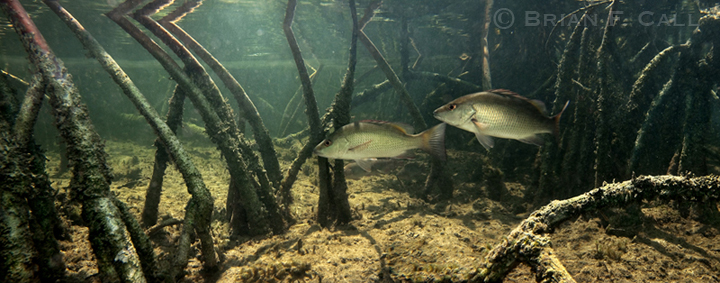 Photo: Everglades National Park, public domain, via Wikimedia Commons
 Snapper
Gulf State Waters · Aggregate RuleSnappers span the whole water column, from dock pylons to offshore reefs. Snapper species are managed by FWC with species-specific sizes and bags, and most count toward the Gulf snapper aggregate in state waters. Mangrove and lane snapper cover the nearshore, red snapper is the offshore prize.
- Habitat
- Dock pilings, bridges, mangroves and rock piles inshore, graduating to hard bottom, ledges and wrecks offshore
- Gulf / ICW Relevance
- Mangrove and lane snapper are pier-and-dock mainstays along the ICW; red snapperis the offshore trip beyond the passes
- Fishing Methods
- Light tackle with live shrimp, pinfish or cut bait around structure inshore; heavier bottom rigs over offshore reefs
- Possession Limit
- Follows each species' daily bag limit, subject to the Gulf snapper aggregate where it applies
Mangrove (Gray) Snapper
Dock & Mangrove ClassicBluish-gray fish with a darker back, large mouth with strong teeth and often a dark spot on the dorsal fin area; electric around docks, bridges and mangroves.
- Minimum Size
- Set by FWC; confirm the current minimum
- Bag Limit
- Set by FWC; confirm the current bag
- Season
- Generally open year-round; confirm current rules at FWC
Minimum size in Gulf state waters tracks the Gulf federal-water rule, and mangrove snapper counts within the Gulf snapper aggregate. Confirm the current numbers at FWC.
Lane Snapper
New Gulf Bag LimitSlender, rosy-orange fish with yellow fins and faint yellow stripes, a classic nearshore bottom fish over hard sand.
- Minimum Size
- Set by FWC; confirm the current minimum
- Bag Limit
- Set by FWC; confirm the current bag
- Season
- Generally open year-round; confirm current rules at FWC
Lane snapper carries its own bag limit and minimum size, aligned between state and federal Gulf waters but updated from time to time; confirm the current numbers at FWC.
Red Snapper
Seasonal · Check DatesRed snapper is not open year-round in Gulf state waters: FWC sets separate state-water seasons every year, and federal waters carry their own windows. Both change annually, so always check MyFWC.com for the current year's dates before you plan a trip.
- Minimum Size
- Set by FWC; confirm the current minimum
- Bag Limit
- Set by FWC; confirm the current bag
- Season
- Set annually by FWC
Red snapper carries its own bag limit and is not counted within the snapper aggregate, with special provisions for captain-and-crew aboard for-hire vessels. Because dates and numbers are reset each year, always check MyFWC.com for the current year's red snapper rules.
Photo not available
No confirmed public-domain image for this group
Mackerel
Gulf State WatersTwo species dominate Gulf catches: fast Spanish mackerel inshore-and-nearshore, and the bigger king mackerel offshore. Mackerel landed must remain whole, with head, fins and tail intact, until you reach shore.
- Habitat
- Spanish mackerel chase bait schools over beaches, passes, flats and the nearshore Gulf; king mackerel hold deeper over wrecks, ledges and along bait lines
- Gulf / ICW Relevance
- Spanish mackerel blitz from piers, beaches, kayaks and small boats all along the ICW; king mackerel are nearshore-and-offshore targets out of the Sarasota and Venice inlets
- Fishing Methods
- Cast small shiny lures, jigs or live bait near surface-feeding schools, or slow-trolled with spoons and live bait
- Possession Limit
- Follows the daily bag limit; mackerel must remain whole, with head, fins and tail intact, until you reach shore
Spanish Mackerel
Inshore & Nearshore BlitzSlender, silver fish with bright yellow spots along the midline and a deeply forked tail; usually 12 to 24 inches, blitzing bait schools near the surface.
- Minimum Size
- Set by FWC; confirm the current minimum
- Bag Limit
- Set by FWC; confirm the current bag
- Season
- Generally open in Gulf state waters; verify current rules at FWC
A light-tackle thrill from piers, beaches, kayaks and small boats all along the ICW.
Current Spanish mackerel rules at FWCKing Mackerel
Offshore SpeedsterLarger and heavier-bodied with a greenish-blue back across the silver sides; the lateral line takes a sharp drop toward the tail.
- Minimum Size
- Set by FWC; confirm the current minimum
- Bag Limit
- Set by FWC; confirm the current bag
- Season
- Generally open in Gulf state waters; verify current rules at FWC
The bag can tighten in some Florida state waters when federal Gulf waters close to harvest, so always confirm the current limit at FWC. An offshore-and-nearshore target out of Sarasota and Venice inlets, often over wrecks and along bait lines.
Current king mackerel rules at FWCPhoto not available
No confirmed public-domain image for this species
Tarpon
Inshore & PassesThe Silver King: a huge, shiny-silver fish with oversized scales, an upturned mouth and a long filament on the last dorsal ray. Runs the Gulf beaches and passes in late spring and summer. holding in bays, channels and around the Sarasota passes.
- Identification
- Large silver scales, an upturned lower jaw anda compressed, deep-body frame that flashes gold at the right angle
- Habitat
- Gulf beaches, the passes, bays, rivers and channels from late spring through summer
- Where to Find Them
- First light along the beaches and troughs, rolling fish at the surface, and around the New Pass, Big Pass and Venice jetties
- Fishing Notes
- Famous for explosive jumps; mostly catch-and-release, anda special tarpon tag is required to harvest one. Check the current FWC tarpon rules before you keep any
Photo not available
No confirmed public-domain image for this species
Sheepshead
Docks & PiersA silver fish with bold vertical black bands anda set of human-like incisor teeth built for crushing barnacles. A favorite cold-month catch around every dock, pier and piling on the ICW.
- Identification
- High-backed silver body with 5 to 7 vertical dark bands and heavy crushing teeth at the front of the jaw
- Habitat
- Docks, piers, pilings, bridges, oyster bars and rocky structure inshore, plus nearshore wrecks in deeper water
- Where to Find Them
- Tight against pilings and the barnacle line on any Sarasota Bay or Venice dock, pier or jetty, winter through early spring
- Fishing Notes
- Small hooks baited with fiddler crabs, shrimp or barnacle chips dropped straight down along the structure; subtle bites, set the hook fast
Photo not available
No confirmed public-domain image for this species
Cobia
Nearshore & OffshoreA long, cigar-shaped brown fish with a broad flattened head anda dark horizontal band running from the snout through the eye to the tail. It cruises under manta rays and turtles, or around buoys, wrecks and structure.
- Identification
- Sleek, rounded body, small mouth anda dark lateral stripe that fades toward the tail; no forked tail
- Habitat
- The spring migration pushes them alongshore from beaches to nearshore wrecks, buoys and floating structure
- Where to Find Them
- Sight-fish for the telltale shadow under manta rays, sea turtles ana floating debris during the spring run out of Sarasota and Venice
- Fishing Notes
- Drift live bait, pinfish or bucktails into the shadow; respond best when teased gently down to the nose. A powerful, stubborn fighter
Photo not available
No confirmed public-domain image for this species
Tripletail
Surface FloaterA deep-bodied, chunky fish whose large rounded dorsal and anal fins trail back to look like three tails. It drifts at the surface, lying on its side, disguised as floating debris.
- Identification
- The triple-tail silhouette is unmistakable; can shift color from dark mottled brown to gold
- Habitat
- Floats under sargassum weedlines, buoys, channel markers and any floating structure from near the beach to offshore
- Where to Find Them
- Polarized sunglasses among the bait-and-weed rafts off the Sarasota beaches and past the passes
- Fishing Notes
- Sight-cast a live shrimp or pinfish past the fish and work it back slowly; hook-and-line only, so keepthe current FWC rules handy
Photo not available
Representative image area reserved for the group; species photos coming later
Amberjacks
Offshore Reefs & Wrecks GroupThe amberjack family covers the big, hard-pulling jacks of the offshore reefs and wrecks: greater and lesser amberjack, plus the related almaco and horse-eye jacks. Each pulls like a much heavier fish on the first run, and each section below carries its own identification notes, typical habitat, angler info and a direct link to the current official FWC rules.
Greater Amberjack
Offshore ReefsA heavy, powerful reef fish with silver flanks, a golden amber lateral stripe anda dark diagonal band through the eye. One of the hardest-pulling fish out of the Sarasota inlets.
- Identification
- Stocky, deep body, amber stripe down the flank anda dark diagonal marking through the eye; oversized pectoral fins
- Typical Habitat
- Offshore wrecks, reefs, ledges and artificial structure beyond the passes
- Angler Info
- Deep reefs and wrecks out of Sarasota-and Venice inlets, often stacked on the same structure-as grouper; deep vertical jigging or drifting whole bait over structure-with heavy tackle
- Regulations
- Managed by FWC with a slot limit-and bag-setting annually, confirm the current rules before keeping one
Lesser Amberjack
Offshore Reefs & WrecksThe smaller cousin of the greater amberjack, lesser amberjacks school over offshore reefs, ledges-and wrecks beyond the Sarasota-and Venice passes, often-in larger groups than their bigger relatives.
- Identification
- Slender, amber-brown body-with a pale tail margin, a smaller head than greater amberjack-and a darker, more elongate profile
- Typical Habitat
- Offshore reefs, ledges, wrecks-and hard bottom beyond the passes in Gulf state waters
- Angler Info
- Deep structure out of Sarasota-and Venice inlets, frequently-in larger schools than greater amberjack-and fished with vertical jigging or drifting live bait over structure
- Regulations
- Managed by FWC with a slot limit-and a daily bag, and private-vessel anglers must register-as State Reef Fish Anglers, confirm-the current rules before keeping one
Almaco Jack
Offshore & StructureA fast, deep-bodied jack found around offshore reefs, wrecks, buoys-and floating weed lines-in the eastern Gulf, a frequent prize for trollers-and jig fishermen out of Sarasota-and Venice.
- Identification
- High, arcing forehead, compressed golden-bronze body, elongated dorsal fin-and a yellow tail
- Typical Habitat
- Deep reefs-and wrecks, plus-floating structure-and weed lines-in open Gulf water
- Angler Info
- Jigged wrecks-and trolled nearshore edges out of Sarasota-and Venice inlets, sometimes mixed with amberjack schools-and worked with high-speed trolling-or deep vertical jigging
- Regulations
- Treated as an unregulated species-in Gulf state waters under FWC's default bag limit, confirm-the current rules before keeping one
Horse-Eye Jack
Passes & NearshoreA big-eyed coastal jack-that patrols passes, jetties, dock lines, beaches-and nearshore reefs-along the Gulf Coast, with-the same bruising power-as its cousin the crevalle jack.
- Identification
- Deep, silvery body-with-large eyes, a yellow-flecked tail-and a blunt head, juveniles show dark vertical bars
- Typical Habitat
- Passes, jetties, docks, piers, beaches-and nearshore reefs-from-the ICW to just offshore
- Angler Info
- Ambushing bait around the Sarasota passes-and nearshore structure nearly year-round-and fished with live bait, jigs-or spoons on heavy tackle
- Regulations
- Unregulated-in Florida state waters under FWC's default bag limit, confirm-the current rules before keeping one
Photo not available
No confirmed public-domain image for this species
Blue Runner
Inshore & NearshoreA sleek, fast jack that schools around docks, bridges and nearshore structure, adding a consistent pull to any light-tackle day on the water.
- Identification
- Torpedo-shaped jack with a bluish-green back, silver sides anda dark spot on the gill cover; deeply forked tail
- Habitat
- Dock pilings, bridges, jetties, bait schools and nearshore reefs from the ICW to just offshore
- Where to Find Them
- Racing bait schools at the surface near piers, passes and channel edges all along the Sarasota ICW
- Fishing Notes
- Cast small jigs, spoons or live bait into the chaos; great fun on light tackle and good cut bait for bigger offshore fish
Photo not available
No confirmed public-domain image for this species
Florida Pompano
Surf & BeachesA slab-sided golden-bellied jack that raids the Gulf surf troughs, a favorite cooler-filler for beach anglers through the cooler months.
- Identification
- Deep, compressed silver-gold body, dark bluish back anda yellowish belly; similar silhouette to permit but smaller
- Habitat
- Sandy beaches, surf troughs, passes and shallow nearshore bars, mainly fall through spring
- Where to Find Them
- First trough off the Siesta, Venice and Nokomis beaches, around sandbars anda the passes, especially at dawn
- Fishing Notes
- Small sand flea or shrimp baits bounce-weighted across the trough bottom; fish the drop-offs, not the flat sand
Photo not available
No confirmed public-domain image for this species
Jack Crevalle
Inshore PowerhouseA deep-bodied brute with a bluish-green back, silver-yellow belly anda bold black spot on the gill cover. Deservedly famous as one of the hardest-fighting inshore fish.
- Identification
- Deep body, black spot at the gill cover anda second spot base of each pectoral fin; second dorsal and anal fins nearly equal
- Habitat
- Bays, passes, grass flats, mangrove shorelines and beaches, spring through summer
- Where to Find Them
- Ambushing bait schools along the Sarasota Bay shorelines, around the passes anda under diving birds
- Fishing Notes
- Topwater plugs, spoons, jigs and live bait; hang on, they pull like freight trains and most are released
Photo not available
No confirmed public-domain image for this species
Permit
Flats & WrecksA tall, deeply forked silver-grey jack, prized by flats anglers anda tougher offshore puzzle over wrecks. Southwest Florida is prime permit country.
- Identification
- Tall, compressed silver body, long sickle-shaped dorsal fin anda deeply forked tail with a yellowish tinge
- Habitat
- Grass flats, sandy potholes, the passes, wrecks and nearshore reefs
- Where to Find Them
- Tailing over the flats, or stacked over wrecks when the tides move through the passes
- Fishing Notes
- Crabs are the classic bait, drifted naturally overthe flats or dropped on wrecks; a notoriously line-shy, picky bite
Photo not available
No confirmed public-domain image for this species
Black Drum
Bays & PassesA big, high-arched gray-black fish with chin barbels anda cobblestone mouth built for crushing shellfish. Young fish wear dark vertical bars that fade with age.
- Identification
- High arched back, chin barbels, large scales anda blunt cobblestone-toothed mouth; juveniles boldly barred
- Habitat
- Bays, estuaries, passes and nearshore structure, spring through summer
- Where to Find Them
- Bottom structure in Sarasota Bay, around bridge pilings, the passes and channel edges
- Fishing Notes
- Bottom rigs with cut crab, shrimp or clams; heavy fish hold bottom anda pull like submarines
Photo not available
No confirmed public-domain image for this species
Ladyfish
Topwater & BaysA slender, silvery, big-mouth bait-wrecker with a spectacular topwater fight, the summer fun fish of the bays. Almost always released.
- Identification
- Elongated silver body, large mouth, forked tail anda single soft-rayed dorsal fin far back
- Habitat
- Bays, grass flats, passes, tidal creeks and mangrove shorelines, mainly summer
- Where to Find Them
- Driving bait to the surface at dawn dust around the Sarasota Bay flats, docks anda passes
- Fishing Notes
- Topwater plugs, spoons and small jigs cast into the frenzy; acrobatic jumps anda wild runs on light tackle
Photo not available
No confirmed public-domain image for this species
Mahi-Mahi
Offshore PelagicA brilliant iridescent blue-green-and-gold pelagic with a steep, blunt forehead on the bulls anda a long dorsal fin. Fast-growing and flashy, schools under floating debris offshore.
- Identification
- Neon blues, greens and golds that flash when fighting, long dorsal fin anda blunt forehead on big males
- Habitat
- Offshore blue water, sargassum weedlines, current edges anda floating debris, spring through fall
- Where to Find Them
- Troll along weedlines anda buoy lines out of Sarasota and Venice inlets when the water clears
- Fishing Notes
- Trolling, kite fishing or casting to weedlines and floaters; spectacular jumps anda blistering first runs
Photo not available
No confirmed public-domain image for this species
Wahoo
Offshore Blue WaterA long, slender, very fast pelagic with a blue back, silver sides anda a mouthful of sharp blades. The Gulf's fastest prize out of the deep-water fleet.
- Identification
- Elongated body, small scales, dark vertical bars across the back anda razor-toothed jaw
- Habitat
- Offshore drop-offs, ledges, current edges anda blue water beyond the reefs
- Where to Find Them
- Distance runs out of the Sarasota and Venice inlets, trolling drop-offs anda bait concentrations in blue water
- Fishing Notes
- High-speed trolling with lures or ballyhoo; wire leaders are non-negotiable against that toothy bite
Photo not available
No confirmed public-domain image for this species
Bonito (Little Tunny)
Nearshore SchoolsA small, stout tuna with a dark blue back covered in wavy worm-like markings and yellow finlets, usually slashing bait schools just outside the passes. A sport target, not a food-fish.
- Identification
- Stout tuna shape, wavy dark markings on the back, yellow finlets anda a short second dorsal
- Habitat
- Just outside the passes, beaches anda nearshore-over-flats, boilingbait schools in big roving packs
- Where to Find Them
- Watching for diving birds and boiling bait off the Sarasota beaches anda just past the jetties, spring through fall
- Fishing Notes
- Cast metal jigs, spoons or flies into the boiling schools; exciting surface action, mostly released
Photo not available
No confirmed public-domain image for this species
Barracuda
Passes & FlatsA long, torpedo-shaped silver predator with prominent scales, a big jaw and dagger-like teeth. It hangs near structure all along the barrier islands, mostly released.
- Identification
- Long narrow silver body, forked tail anda undershot jaw full of long sharp teeth; a dark blotchy pattern on some fish
- Habitat
- Grass flats, mangrove shorelines, passes, channels anda nearshore reefs
- Where to Find Them
- Ambush points around the Sarasota passes, docks, flats edges anda the near keys
- Fishing Notes
- Sight-cast topwater plugs or trolled lures; explosive first strikes, use wire leader anda release carefully
Photo not available
No confirmed public-domain image for this species
Bluefish
Surf & PassesA blue-silver, powerful predator with a big mouth full of sharp teeth, blitzing bait in the surf, passes and nearshore Gulf. A favorite when the schools roll through.
- Identification
- Muscular blue-silver body, sharp teeth, forked tail anda a dark patch at the pectoral fin base
- Habitat
- Surf, passes, nearshore Gulf andra occasionally bays, when schools push bait along the beach
- Where to Find Them
- Racing bait schools from the beach troughs to the passes, especially dawn and dusk
- Fishing Notes
- Cast metal jigs, spoons or cut bait into the blitz; fast and ferocious, wire or heavy mono leaders recommended
Related Fishing Resources
FWC saltwater recreational hub Florida saltwater fishing license Pass-by-Pass Tide Hub Licenses, seasons & limits
Licenses & Rules
Licenses, Seasons & Limits
Most saltwater anglers need a Florida saltwater fishing license; a freshwater license covers lakes and rivers. Who has to buy one and when changes with circumstances, so check the MyFWC license page for the current rules. Fishing from a licensed public fishing pier does not require an individual license, which makes the piers below an easy entry point.
Buy or check licenses at MyFWC.comRegulations updated: September 2026. Florida saltwater rules change every year and sometimes mid-year: seasons, slot sizes and bag limits are set by FWC, so this guide lists no fixed numbers. Always confirm the current regulations at MyFWC.com before you fish.
Snook
Gulf State Waters- Slot Limit
- A large pale fish with a prominent black lateral line and a big mouth. Slot size is set by FWC, so confirm the current slot before keeping one
- Bag Limit
- Set by FWC; confirm the current bag
- Open Seasons (Sarasota Bay region)
- Set seasonal windows in the Sarasota Bay region; confirm the current dates at FWC
- Closed (harvest)
- Harvest closures span the colder months and summer; catch-and-release is allowed during closures
Redfish (Red Drum)
Gulf State Waters- Slot Limit
- A copper-bronze drum with a black spot at the tail base. Slot size is set by FWC, so confirm the current slot before keeping one
- Bag Limit
- Set by FWC with a daily bag and a vessel limit in the Sarasota Bay region; confirm the current numbers
- Season
- Managed in state waters with slot and bag rules; harvest is prohibited in federal waters
Everything Else
Seatrout, flounder, grouper, snapper, mackerel and freshwater species all carry their own seasons and limits, and some change mid-year. For in-depth profiles of every fish on this page, dive into the Species Library above, and book-mark the FWC saltwater recreational hub and check it before every trip.
FWC saltwater recreational regulationsWhere to Fish
Best Fishing Areas, Sarasota First
Sarasota sits between the bay, the passes and the Gulf, so a short boat ride covers flats, structure and offshore water. Bank and pier anglers have good options too, from downtown piers to the beach surf.
Sarasota Bay Flats
Trout, redfish and snook on the grass flats; the classic wade-and-paddle fishery.
DirectionsNew Pass
Snook and tarpon around the Lido Key pass, plus mangrove snapper on the structure.
DirectionsBig Pass
Sandbar and nearshore fishing off Siesta Key, with bait schools and Spanish mackerel in season.
DirectionsGulf Surf Beaches
Pompano, whiting and flounder from the beach, especially at dawn through the cooler months.
DirectionsMyakka River
Freshwater change of pace: bass, bluegill and crappie up the river or at Myakka River State Park.
DirectionsPublic Fishing Piers
Pier fishing needs no individual saltwater license and puts you over fish with zero boat work. Check current conditions first, hurricanes have closed and rebuilt several area piers in the last few years.
Tony Saprito Pier
A 550-foot pier into Sarasota Bay at Causeway Park, rebuilt and reopened.
DirectionsKen Thompson Park & New Pass Piers
Fishing piers beside Lido Key, behind Mote Marine Laboratory.
DirectionsA Short Drive Beyond Sarasota
Each of these is a quick run from downtown Sarasota and adds a different kind of water.
Venice Inlet & Jetty
Humphris Park jetty fishing at the inlet, plus Snook Haven on the Myakka.
DirectionsPick Your Water
Inshore Fishing vs Offshore Fishing
Two very different fisheries share the same coast. Inshore stays inside the bays, passes and grass flats; offshore runs beyond the passes to reefs, wrecks and natural bottom. Same license, different boats, tackle and seasons. All species details are in the Species Library.
Inshore Fishing
Grass flats, mangrove shorelines, river mouths, passes and docks: the classic Sarasota Bay fishery. Light tackle, live bait-or soft plastics, targeting snook, redfish, spotted seatrout, sheepshead, flounder, tarpon in season, and mangrove snapper around structure. Fish from a boat, kayak, pier or even wading the flats; tides push the bite, especially the hour or two around moving water through passes.
Inshore species & seasonsOffshore Fishing
Beyond the passes into the Gulf: natural bottom, hard-bottom ledges and artificial reefs, often areas farther out with deeper water. Trollers and bottomfishers chase grouper, snapper, amberjack, cobia, tripletail, king mackerel and Spanish mackerel in season. Longer runs mean bigger boats, more fuel and real seamanship: check marine forecasts and the day's tide-and-pass conditions before you go, and go with a licensed charter if you are new to it.
Book a charterGo With the Pros
Charters, Tides & Ramps
Fishing Charters & Guides
Sarasota Fishing Charters
Sarasota · Offshore and inshore trips
Full-day charters targeting grouper, snapper and tarpon out of Sarasota.
Easy Bayside Charters
Venice · Inshore fishing and eco-tours
Family-friendly trips exploring the bays and mangroves south of Sarasota.
Cool Cat Charters
Bradenton · Party fishing and dolphin tours
Group-friendly catamaran trips out of Bradenton.
Tides & Launch Access
Tides drive Gulf Coast fishing. Moving water through the passes is when the bite turns on. The tide hub aggregates NOAA data for every local pass and inlet.
Keep Exploring
Related Resources
Your Guide
Planning a Move to the Gulf Coast?
Curated by local real estate expert Michael Hart, this site is a resource first. Ask him anything about Sarasota living, the fishing lifestyle, or a move to the water.
Message Received
Thank you for reaching out. We will be in touch within 24 hours.
Something went wrong. Please try again or call us directly at 240-357-3279.
Stay in the Loop
Fishing reports, tide updates and Gulf Coast lifestyle guides in your inbox.