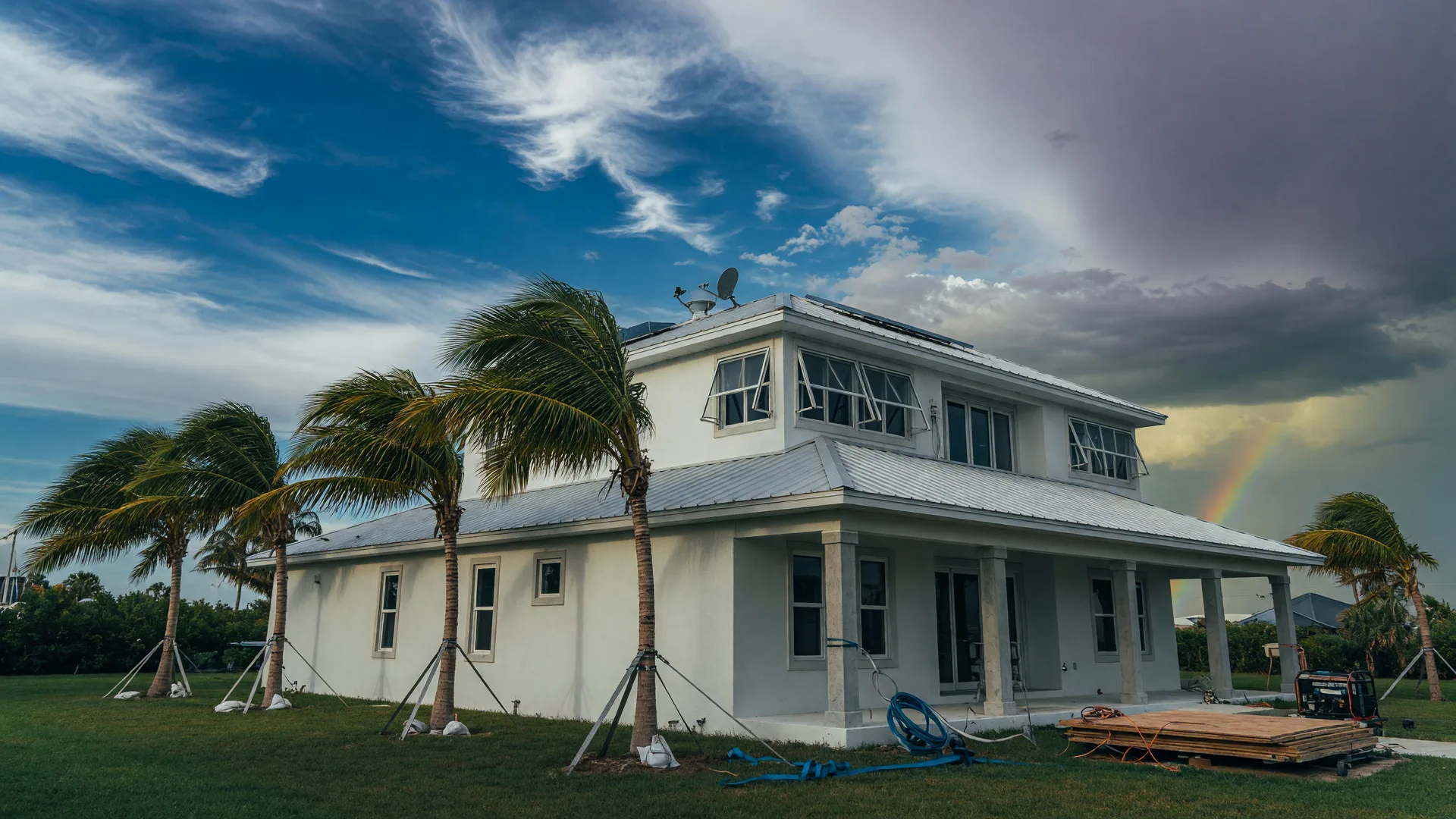
01 — Preparedness
Hurricane Preparedness Guide
Living on the Gulf Coast means being prepared for hurricane season. With modern building codes, proper insurance, and a solid plan, the risk is manageable and millions of Floridians live safely through every season.
02 — Before the Season
Before Hurricane Season (June 1)
Review your insurance policy
Confirm coverage details, hurricane deductibles (typically 2-5% of home value), and flood insurance status. Remember: standard homeowner's policies do NOT cover flood damage.
Know your evacuation zone
Sarasota and Manatee counties have designated evacuation zones (A through E). Zone A is most vulnerable. Check your zone at your county's emergency management website.
Assess your home's resilience
Check roof condition, window protection (impact glass or shutters), garage door bracing, and exterior door reinforcement. Older homes may need retrofitting.
Stock your emergency kit
Prepare enough supplies for 7-10 days: water (1 gallon/person/day), non-perishable food, medications, batteries, flashlights, first aid, cash, important documents in a waterproof bag.
Plan for your vehicle
Keep gas tank full. Identify your evacuation route beforehand. If you have an electric vehicle, know the charging options along your route.
Communicate your plan
Share your family's hurricane plan with neighbors and family elsewhere. Designate an out-of-state contact as a central communication point.
03 — Supplies
Emergency Supplies Checklist
Prepare supplies for 7-10 days. These categories cover the essentials that every Gulf Coast household should have ready.
Water & Food
- 1 gallon per person per day (7-10 days)
- Non-perishable food (canned goods, protein bars, dried fruit)
- Manual can opener
- Cooler and ice packs
- Pet food and water
Safety & Medical
- First aid kit
- Prescription medications (2-week supply)
- Hand sanitizer and disinfecting wipes
- Sunscreen and bug spray
- Face masks
Tools & Equipment
- Flashlights (one per person)
- Extra batteries
- Battery-powered or hand-crank NOAA radio
- Multi-tool or utility knife
- Duct tape and plastic sheeting
Documents & Cash
- Insurance policies in waterproof bag
- Photo ID and important documents
- Cash (ATMs may not work)
- Medical records and prescriptions
- Home inventory list with photos
Comfort & Sanitation
- Personal hygiene items
- Toilet paper and paper towels
- Garbage bags and ties
- Sleeping bags or blankets
- Entertainment (books, cards, games)
For the Home
- Portable generator and fuel
- Plywood or storm panels
- Sandbags if in flood-prone area
- Fire extinguisher
- Sump pump (if applicable)
04 — Zones
Understanding Zones
Evacuation Zones
Evacuation zones (A through E) are determined by storm surge risk, not wind. Zone A is the most vulnerable. In a Category 3 storm or higher, mandatory evacuations typically cover zones A and B. Check your zone with your county emergency management office before hurricane season starts. Your zone determines when and whether you need to evacuate.
Flood Zones Overview
Special flood hazard area along the coast. Flood insurance required for federally backed mortgages. Elevated construction required.
100-year floodplain areas. Flood insurance required. Base flood elevation standards apply.
Outside 500-year floodplain. Insurance not required but recommended. Most inland properties fall in this zone.
Flood risk possible but not mapped in detail. Insurance available but not required for lending.
Check Your Flood Zone
Official lookupEnter your address into the official FEMA and Sarasota County flood map services, not a third-party estimator, to see the flood zone FEMA has mapped for your property. We do not state a zone for any address here; the official lookups below answer that for you.
Open the dedicated Check Your Flood Zone resourceFlood Zone (FEMA FIRM map)
A flood zone comes from FEMA's flood insurance rate map and describes flood risk for insurance purposes: does your property sit in a Special Flood Hazard Area (such as Zone AE or coastal VE), a moderate-to-low-risk Zone X, or an undetermined Zone D? It determines whether flood insurance is required for a federally backed mortgage and how much coverage to carry。
Hurricane Evacuation Zone (Sarasota County Levels)
An evacuation zone (A through E) is determined by storm surge risk, not flood plain mapping, and tells you when and whether to evacuate for a given storm. They are not the same thing: your property can be low flood risk but still in an evacuation zone near the coast, or vice versa. Look up your evacuation level at your county emergency management page.
05 — Home Resilience
Evaluating a Home's Hurricane Resilience
Impact-Resistant Windows
Tested to withstand debris impacts at up to 130 mph. Reduce pressure differential risk. Premium feature that also reduces noise and improves energy efficiency.
Hurricane Shutters
Aluminum roll-down, accordion, or panel shutters provide excellent protection. Accordion shutters are most convenient for daily use.
Fortified Roof
Building code requires hurricane straps and clips connecting roof to walls. Hip roofs perform better than gable roofs. Secondary water barrier under shingles adds protection.
Reinforced Garage Door
The garage door is often the most vulnerable point. Braced or wind-rated doors prevent structural failure that can compromise the entire home.
06 — During
During the Storm
- Stay indoors away from windows, glass doors, and skylights
- Monitor local news and weather updates via battery-powered radio or NOAA weather radio
- If power goes out, keep refrigerator and freezer closed to preserve food
- Use generators outdoors only, at least 20 feet from windows and doors. Never indoors.
- Avoid using candles for light. Use flashlights or battery-powered lanterns instead.
- Do not go outside until officials confirm the storm has passed
- Be aware: the eye of the storm brings a temporary calm, but the back wall follows quickly
- Stay away from floodwater. Do not walk, swim, or drive through flood waters.
07 — After
After the Storm
- Wait for official word that it is safe to return if you evacuated
- Document damage with photos and video for insurance claims before making temporary repairs
- Contact your insurance company as soon as possible to start the claims process
- Beware of downed power lines and standing water. Assume all lines are live.
- Check on neighbors, especially elderly or vulnerable residents
- Use text messages instead of calls to keep phone lines clear for emergencies
- Be cautious of contractors offering immediate repairs. Verify licenses and use local, established companies.
- Boil water or use bottled water until local authorities confirm tap water is safe
08 — Insurance
Insurance Considerations
Florida's insurance market is unique. Understanding your coverage before a storm hits is critical. Homeowner's policies in Florida typically have separate hurricane deductibles. These are calculated as a percentage of your home's insured value (commonly 2% to 5%), not a flat dollar amount. Flood insurance is a separate policy, either through the National Flood Insurance Program (NFIP) or private insurers. Contents coverage for flood is optional and often overlooked. Wind-driven rain damage is typically covered under homeowner's policies if there is a breach in the building envelope. After a storm, document everything thoroughly, make only emergency repairs, and file claims promptly. Consider a certified insurance advisor who specializes in Florida coastal properties.
Peace of Mind
Find a Hurricane-Ready Home
Newer homes built to modern Florida building codes offer significantly better hurricane protection. Michael can help you find a property with the features that matter most for safety and peace of mind.
Message Received
Thank you for reaching out. We will be in touch within 24 hours.
Something went wrong. Please try again or call us directly at 240-357-3279.
Safety Updates
Seasonal preparedness tips, insurance guidance, and community alerts delivered to your inbox.