New construction is a huge part of the Gulf Coast housing market right now, and it is easy to see why: modern building codes, builder warranties, and the chance to pick your finishes. But buying from a builder is a different process from buying a resale, and the differences show up in the price, the timeline, and the paperwork. Here is what buyers should know before they sign.
The Builders Building Right Now
The region has three tiers of builders, and knowing which tier you are dealing with sets your expectations.
National production builders dominate the volume. D.R. Horton, Pulte, Lennar, KB Home, Centex, and David Weekley all have active communities across the region. In Manatee County alone, D.R. Horton had roughly 148 new homes on the market and Pulte around 66 in recent counts. In Lee County, D.R. Horton is building in seven communities, and Pulte has Corkscrew Estates, Bonita Del Sol, and Verdana Village. In Pinellas County, David Weekley and DRB Homes are active, and Toll Brothers is building at Seminole Isle and Montrose at Innisbrook.
Regional and local builders offer more variety. Neal Communities, a longtime Southwest Florida builder, is active in Sarasota and Manatee counties with communities like Grand Park in Sarasota, Grand Palm near Venice and Wellen Park, Vistera of Venice, and Canoe Creek and Palm Grove in the Lakewood Ranch and Parrish area, while its SimplyDwell brand is opening new communities in Sarasota, North Port, and Parrish. Lee Wetherington and Kolter Homes build across Sarasota County, and Holiday Builders is active in Port Charlotte and South Gulf Cove in Charlotte County.
Luxury and semi-custom builders handle the top of the market, with Toll Brothers and DiVosta among the names buyers meet. Taylor Morrison straddles the line, with resort-style communities like the Skye Ranch neighborhoods in Sarasota, Tiburon and Magnolia Bay in Nokomis, Esplanade at Wellen Park in south Sarasota County, and Firethorn and Cove at Coasterra in Manatee County.
Builders move in and out of communities as phases sell, so the current list changes month to month. The new construction guide keeps a running overview, and the specific communities worth visiting depend on your budget and timeline.
New vs Resale: The Real Tradeoffs
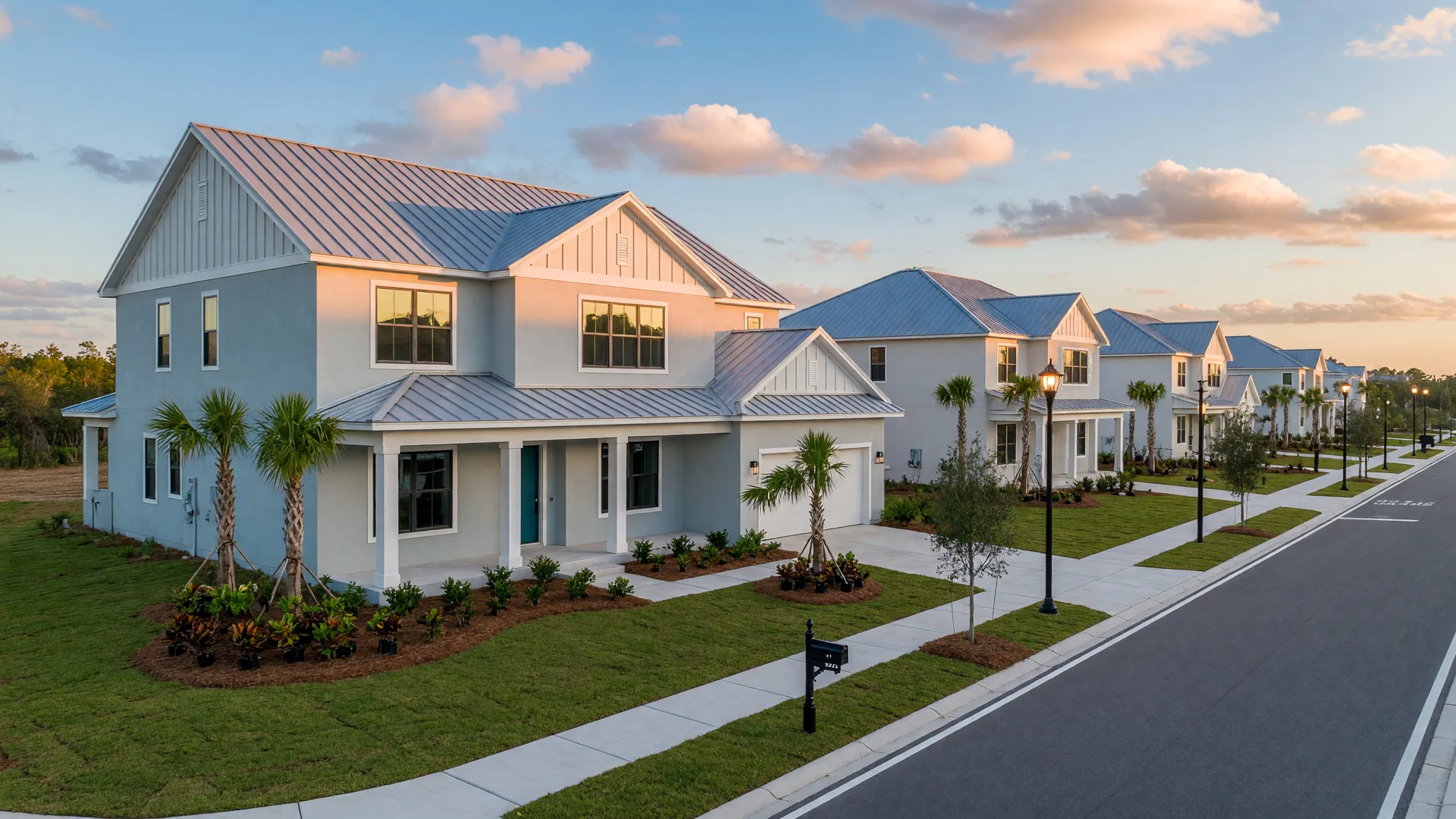
New construction buys you modern hurricane-resistant building codes, energy-efficient systems, a builder warranty, and the ability to choose finishes. It also means waiting through construction, paying for upgrades, and living in a community that may still be filling in.
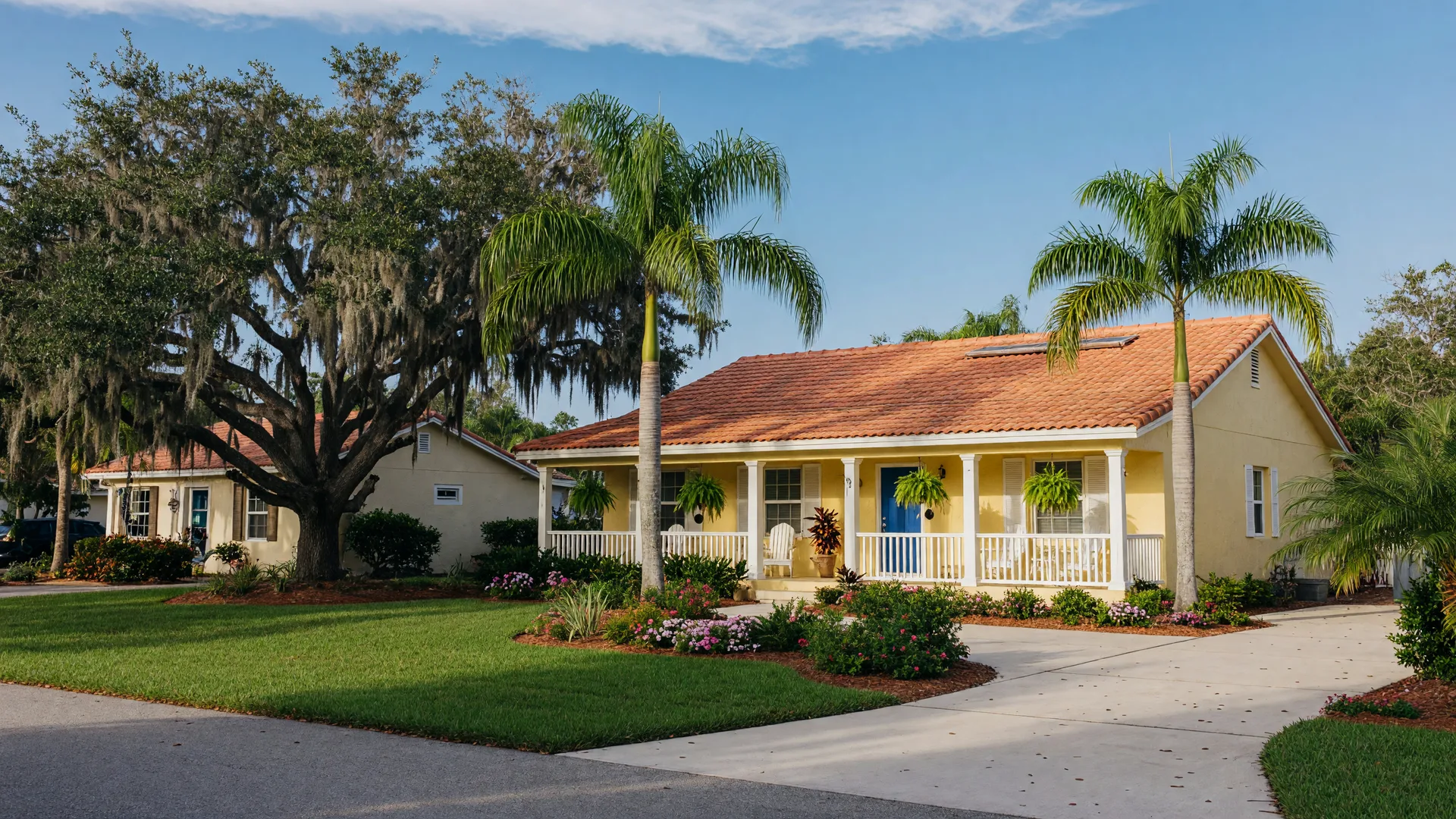
Resale buys you an established neighborhood, mature landscaping, immediate occupancy, and often a more central location. It also means older systems, possibly an older roof, and insurance costs that reflect the home's age. On the Gulf Coast, the insurance comparison is real: newer construction with impact windows and a wind-mitigated roof generally quotes more favorably than an older home with the same footprint.
Base Price vs Final Price
The base price on a builder's website is the starting point, not the number you will pay. Three things push it up: the lot premium, the upgrades, and the design center selections.
Lot premiums vary with what the lot offers. A corner lot, a lake view, or a preserve view commands more than an interior lot, and the premium is set per lot. Upgrades and design center choices are where budgets quietly grow: flooring, cabinets, countertops, and lighting upgrades add up quickly, and the sales team will present options in packages. Get the full itemized price in writing before you compare it to resales in the same area.
Incentives and Preferred Lenders
Builders routinely offer incentives, especially when inventory is available: closing cost contributions, design center credits, and rate buydowns through the builder's preferred lender. The incentives are real, but they are often tied to financing through that lender, so compare the total cost carefully. A rate buydown through the preferred lender can be a good deal, and the same incentive in credits can pay for meaningful upgrades. Run both scenarios with your own lender before deciding.
Warranty, Inspections, and the Walkthrough
Florida builders typically warranty their work in tiers: one year for workmanship, two years for major systems, and ten years for structural components. The exact terms are in the contract, so read them.
A builder's home is still a construction project, and independent inspections are worth every dollar. Schedule a third-party inspection before the foundation pour, before the drywall goes up, and again before closing. The pre-drywall inspection is the one that catches framing, plumbing, and electrical issues while they are still visible. At closing, do a thorough walkthrough and document every punch-list item in writing.
Flood Elevation and Insurance on New Builds
Florida's building code requires new homes in flood zones to build above the flood level. Under the current code, the lowest floor of a home in a high-risk zone must be at or above the base flood elevation plus one foot of freeboard, and homes in coastal V zones must elevate the lowest horizontal structural member to the same standard, with breakaway walls below. Some local ordinances require even more. That elevation work is why new coastal construction often sits noticeably higher than the older homes around it, and it is a genuine safety and insurance advantage.
Flood insurance is still a separate policy, and the premium depends on the property's flood zone, its elevation, and its coverage amount. The flood zones explainer and the flood insurance guide walk through both, and your agent can pull the zone and elevation for any specific lot before you commit.
Closing Costs and the Year-One Budget
New construction closings come with the usual costs: title insurance, recording fees, lender fees, and prepaid taxes and insurance. Two items deserve extra attention. First, the builder's title company and closing team are convenient, but you can shop the title insurance. Second, budget for a full year of taxes and insurance in escrow, because a new home is assessed at full market value from day one, and the tax bill will reflect that. The cost of living guide shows how those numbers fit into the broader budget.
Where to Look
If new construction is on your list, start with the communities where the builders are most active: Lakewood Ranch, Wellen Park, North Port, Cape Coral, and Punta Gorda each have a different mix of builders, price points, and lifestyles. The community quiz takes about five minutes and can point you toward the shortlist worth visiting in person.