Buying your first home is one of those milestones that feels complicated until someone walks you through it, and on Florida's Gulf Coast there are a few local twists that make the process different from anywhere else. The good news: the fundamentals are the same everywhere, and the regional specifics, like flood insurance and the tax structure, are learnable in an afternoon. This guide walks through the whole journey, from pre-approval to closing, so you know what to expect at every step.
Start With Pre-Approval
Before you look at a single house, get pre-approved for a mortgage. Pre-approval means a lender has reviewed your income, credit, and debts and committed to a loan amount, which tells you exactly what you can afford and makes your offers competitive in a market where sellers want certainty. It does not lock your interest rate, so you can still shop rates while you house-hunt.
Rates are worth understanding in context. The national average for a 30-year fixed mortgage stood at 7.40 percent in early October 2026, according to Freddie Mac's weekly survey, up from about 6.30 percent a year earlier. Bankrate's separate survey put the average at 7.53 percent the same week. Forecasters expect rates to ease toward the high 6s by the end of the year, but no one can time the market. The practical move is to buy when you are ready, and to compare at least two or three lenders, because the difference of a quarter point changes your payment by thousands over the life of the loan.
What Your Monthly Payment Really Includes
The sticker price of a home is only the beginning. Your monthly payment is built from five pieces: principal, interest, property taxes, homeowners insurance, and, in many Gulf Coast communities, an HOA fee. Lenders typically collect the taxes and insurance with your payment and hold them in escrow, so your monthly number includes them automatically.
The Gulf Coast adds two more line items to understand. Wind coverage is part of most homeowners policies, but flood insurance is a separate policy entirely, and your lender will require it if your home sits in a flood zone. Since January 1, 2026, Citizens Property Insurance, the state's insurer of last resort, has also required policyholders with $400,000 or more in dwelling coverage to carry flood insurance. The flood zones explainer shows whether a property sits in a zone that requires it, the home and flood insurance guide explains the coverage side, and the mortgage calculator lets you model all of these pieces for any price point.
Down Payment Options
You do not need 20 percent down. Conventional loans accept as little as 3 to 5 percent down, FHA loans require 3.5 percent with a credit score around 580 or higher, and VA loans offer zero down for eligible veterans and service members. The 20 percent threshold matters mainly for private mortgage insurance, which drops off once you reach 20 percent equity.
Florida also has real help for first-time buyers. The Florida Housing Finance Corporation pairs a 30-year fixed-rate mortgage with down payment assistance through programs like Florida Assist, which offers up to $10,000 as a zero-interest, deferred second mortgage with no monthly payment. The HFA Preferred grant provides 3 to 5 percent of the loan amount as a true grant, and Florida Hometown Heroes offers up to 5 percent of the loan amount for eligible frontline workers including teachers, nurses, and first responders. Programs have income and purchase price limits, funding is limited, and you must work with an approved lender, so check the current details early. The cost of living guide shows how down payment and monthly costs fit into the full budget picture.
Closing Costs: Budget 2 to 5 Percent
Closing costs are the expense first-time buyers most often underestimate. In Florida, they typically run about 2 to 5 percent of the purchase price: on a median-priced home around $389,000, that is roughly $7,800 to $19,450. Bankrate's average figure for Florida is about $8,554, and CoreLogic's data puts the state average near 2.3 percent of the sale price. The costs include lender fees, title insurance, recording fees, prepaid taxes and insurance, and Florida's documentary stamp tax on the note and mortgage.
Two ways to soften the hit: negotiate with the seller for a closing cost credit, and ask your lender about programs that fold some costs into the loan. Your lender must give you a Loan Estimate within three business days of your application, which itemizes every fee, so there are no surprises at the closing table.
New Construction vs. Resale
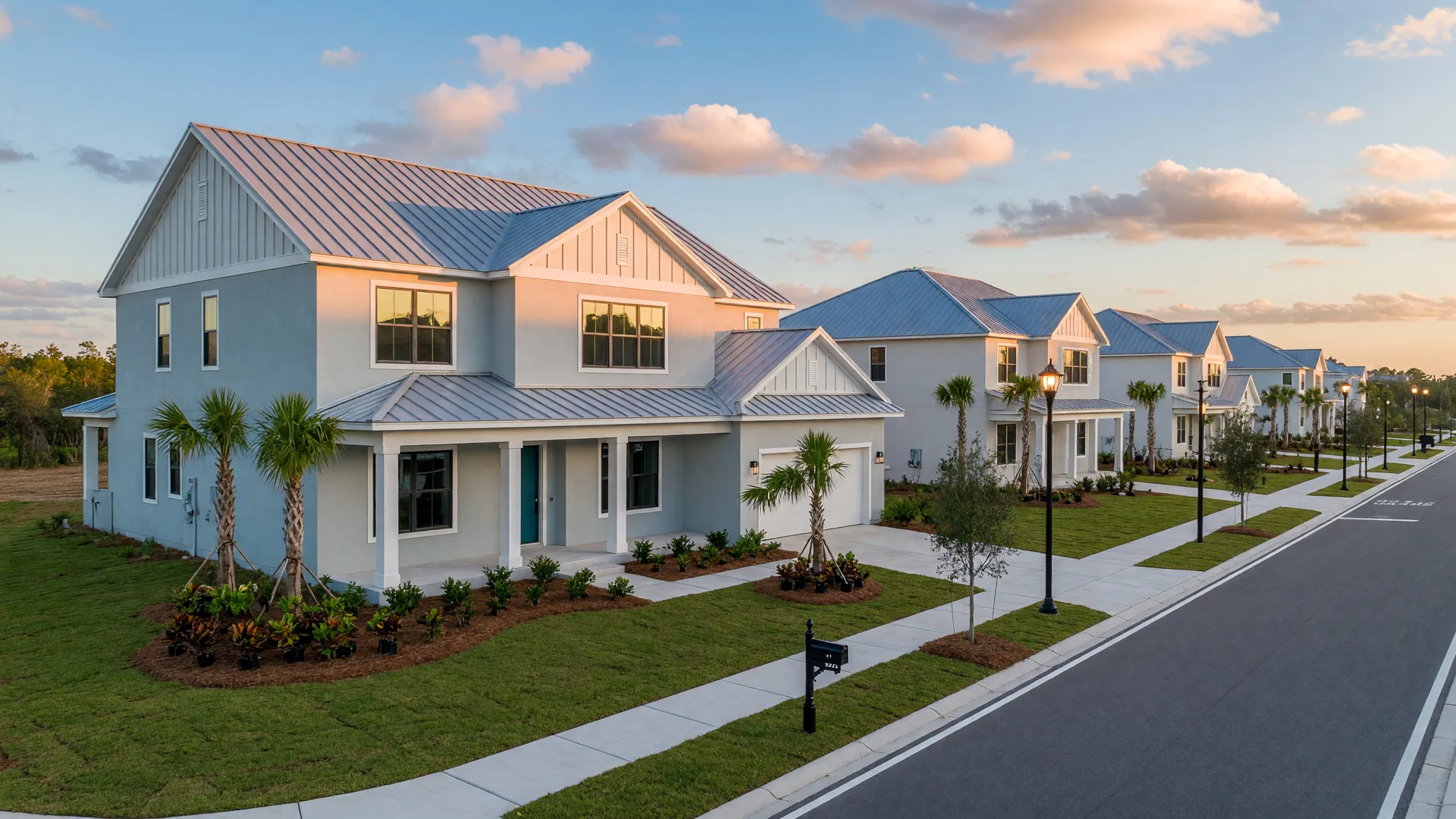
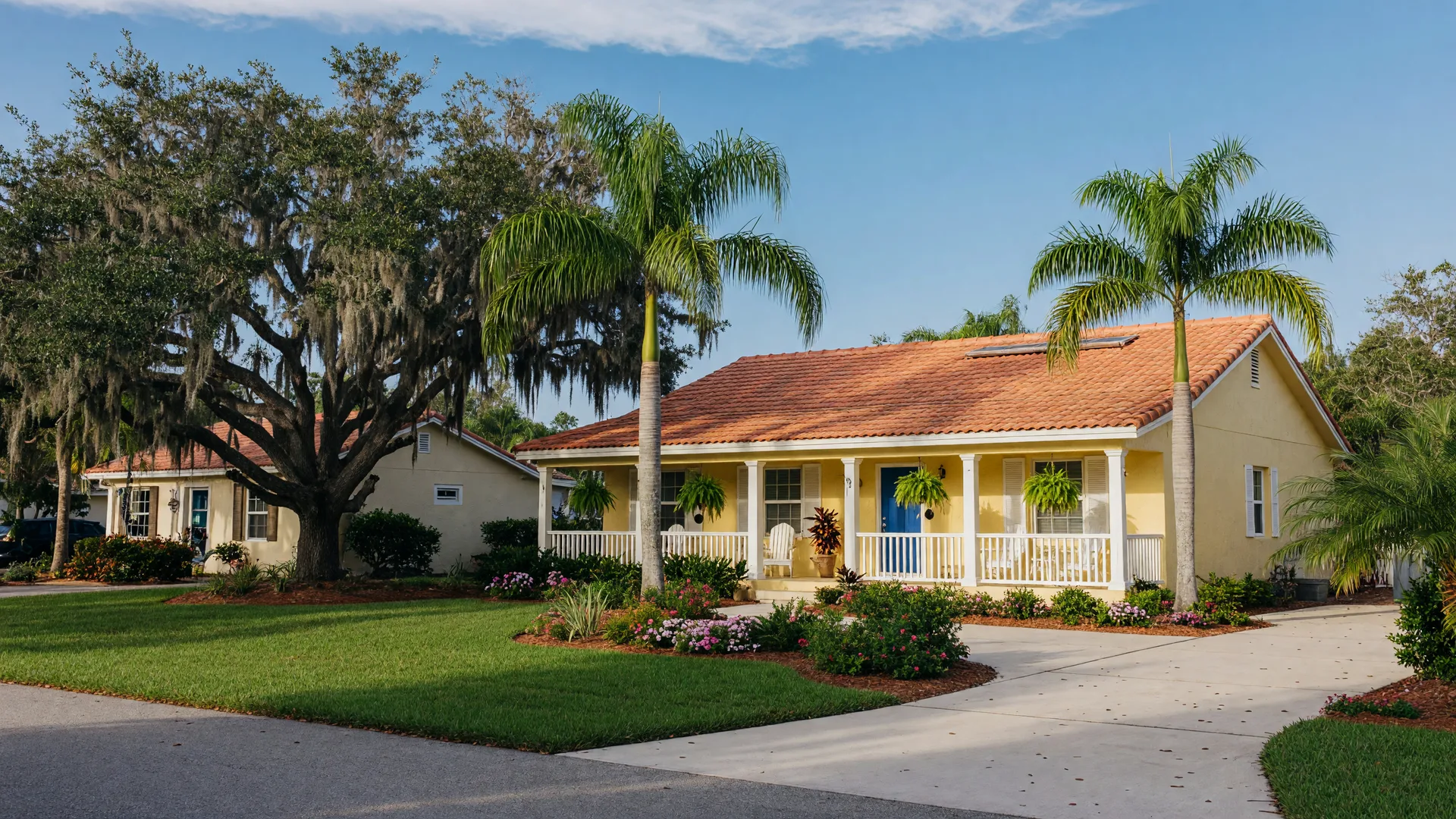
The Gulf Coast is one of the country's most active new-construction markets, so the new versus resale decision comes up constantly. New construction offers builder incentives, modern layouts, and the chance to customize, and it is often more energy-efficient. Resale homes offer established neighborhoods, mature landscaping, and sometimes a lower price per square foot. The trade-off to know: new construction is assessed at full market value from day one, so the first year's tax bill can be higher than a comparable resale with a homestead cap. The new construction guide covers builder incentives, common contract terms, and what to verify before you sign.
How a Buyer's Agent Helps
A buyer's agent costs you nothing out of pocket in the vast majority of transactions, because the seller pays the commission, and the value is substantial. Your agent pulls flood zone data and insurance history for every property you consider, knows which neighborhoods fit your budget, negotiates on your behalf, and coordinates inspections, appraisals, and the closing timeline. On the Gulf Coast, local knowledge matters more than anywhere: the difference between two streets can be the difference between a flood insurance premium of $900 and one of $4,000.
Where to Start Looking
If you are not sure which community fits your budget and lifestyle, the community guides and the community quiz are the fastest way to build a shortlist. Communities like North Port and Port Charlotte tend to offer more attainable price points for first-time buyers, while Sarasota and Venice command premiums for their walkability and beaches. The relocation guide covers the broader move, from establishing residency to setting up utilities, and the mortgage calculator turns any price into a monthly number you can plan around. Take it one step at a time: pre-approval first, then neighborhoods, then offers. The process is very doable, and thousands of first-time buyers on the Gulf Coast prove it every year.