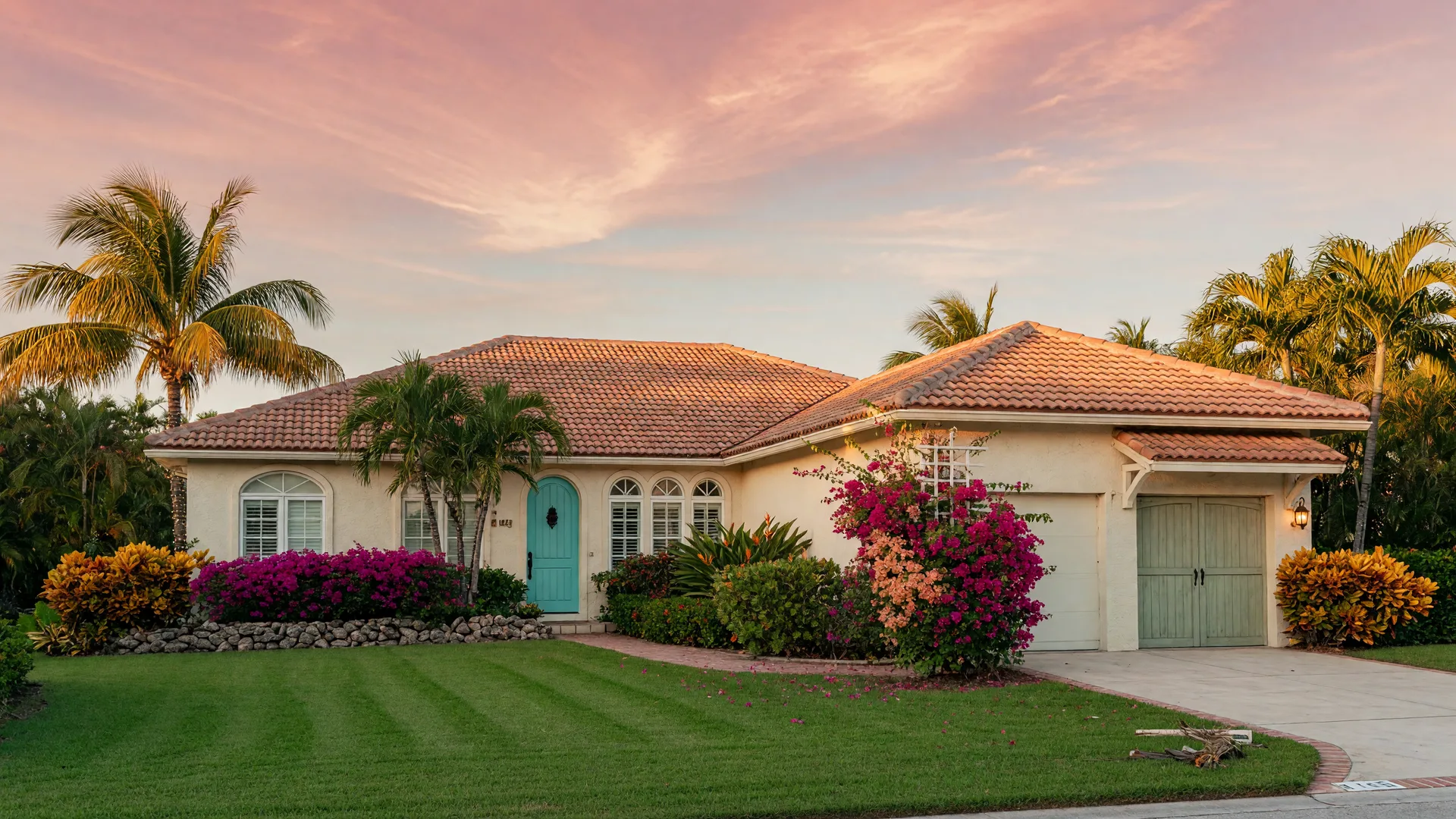
Deciding to sell your home in Southwest Florida is one thing; getting the price, the timing, and the process right is another. The market that peaked in the boom years has settled into something more balanced, and in a balanced market the details decide the outcome. Here is the step-by-step path most successful sellers follow, from the first conversation to the closing table.
Step One: Read Your Local Market Before You Price
Pricing is the single most important decision you will make, and it should be based on data, not on what your neighbor's cousin was told in 2021. The most recent report from the Realtor Association of Sarasota and Manatee (RASM), covering August 2026 and released in mid-September, shows a market that has cooled into a more normal rhythm. In Sarasota County, the single-family median sale price was $470,000, down 1.1% year over year, with 646 closed sales and about 3.7 months of supply. Homes spent a median of 47 days on the market before going under contract, and about 91 days from listing to closing. Manatee County tells a slightly different story: the median sale price rose 5.9% year over year to $495,000, with 687 closed sales, up 5.7%.
Two numbers matter most for a seller: the median price in your immediate area and how long homes are taking to sell. Both vary street to street, and the market snapshot we update regularly tracks them across Sarasota, Venice, Osprey, Nokomis, and Bradenton. Use it as a starting point, then ask your agent for a comparative market analysis built from homes like yours, in your neighborhood, from the last 90 days.
Step Two: Prepare Before You List
Buyers on the Gulf Coast are detail-oriented, and the condition of a home shows up in the offers. Start with the items Florida buyers and their inspectors care about most: the roof and its age, the HVAC system, the electrical panel, and the plumbing. Many insurers ask for a four-point inspection on older homes, and a wind mitigation inspection can document the features that lower a buyer's insurance premium. If your roof is near the end of its useful life, expect it to come up in negotiations; some buyers will ask for a credit or a new roof.
Beyond the mechanicals, declutter, deep clean, and stage the main living areas. You do not need a full redesign; you need rooms that photograph well and feel spacious. Most buyers start their search online, so the listing photos are your first showing.
Step Three: Know What Buyers in This Region Care About
Southwest Florida buyers ask questions that buyers in other states rarely do, and the answers affect both price and how quickly a home sells.
Flood zone. The FEMA flood maps determine whether a buyer with a federally backed mortgage will be required to carry flood insurance. Homes in high-risk zones, shown as A or V on the maps, carry that requirement for the life of the loan. The home and flood insurance guide explains the zones and the coverage in plain language.
Insurance costs. Flood premiums in Florida average roughly $900 a year under the NFIP's Risk Rating 2.0, and homeowners policies on the Gulf Coast commonly run from about $3,100 to $5,500 a year depending on the county and the property. A buyer who gets a shocking insurance quote may walk, so it helps to know what your home's likely premium will be before you negotiate.
Hurricane readiness. Impact windows, hurricane shutters, a newer roof, and a wind-mitigated structure all translate into lower insurance costs and a smoother sale. If you have made upgrades, keep the paperwork that documents them. The hurricane preparedness guide covers what matters most.
New construction competition. Buyers comparing your resale against a new build will weigh modern building codes, warranties, and builder incentives against your location, lot, and price. That comparison is a real part of the market now, which is why pricing and condition matter more than ever. The new construction guide shows what builders are offering in your area.
Step Four: Price Realistically and Time It Well
In a balanced market, the homes that sell fastest are priced at or just below what the data supports. Overpricing has a real cost: the first few weeks of showings are the most valuable, and a home that sits loses momentum. If the market snapshot shows 47 days to contract in Sarasota County, budget for roughly six to eight weeks on the market, and revisit the price if you are not seeing showings after the first few weeks.
Timing has a seasonal flavor on the Gulf Coast. Winter and spring bring the strongest buyer activity, with snowbirds and relocators shopping in the mild months. Summer works too, but the pool is smaller and hurricane season adds a layer of caution for some buyers.
Step Five: Work With an Agent Who Knows the Local Market
A good listing agent does more than put a sign in the yard. They build the comparative market analysis, direct the photography and marketing, handle showings and feedback, negotiate the offer, and manage the inspection and closing timeline. In a market with 3.7 months of supply, buyers have choices, and the agent's job is to make your home the obvious one. Ask about recent listings in your neighborhood, the marketing plan, and how they handle multiple offers.
Step Six: Offers, Negotiation, and Inspections
When offers arrive, look beyond the price. Consider the buyer's financing, their timeline, and their contingencies. An offer with a strong pre-approval and a flexible closing date can be worth more than a slightly higher number with risk attached.
After the contract, the buyer's inspection period is where deals live or die. Expect requests for repairs or credits, especially around the roof, the HVAC, and anything the four-point or wind mitigation inspections flagged. Approach it as a negotiation, not a confrontation: reasonable requests keep the deal moving, and your agent will help you separate must-haves from nice-to-haves.
Step Seven: Closing
The final stretch involves the appraisal, the title work, and the buyer's final loan approval. The title company will handle the paperwork, and your agent will give you a net sheet early so there are no surprises. Budget for closing costs that typically include title insurance, recording fees, and any agreed credits or concessions.
The Next Step
Selling is a sequence of small decisions, and the data, the preparation, and the timing are all within your control. If you are thinking about listing, the most useful next step is a conversation about your specific home: what it is worth today, what buyers in your neighborhood are paying, and what would move the needle. You can reach out through the contact page anytime, no pressure, and get a straight answer about your situation.