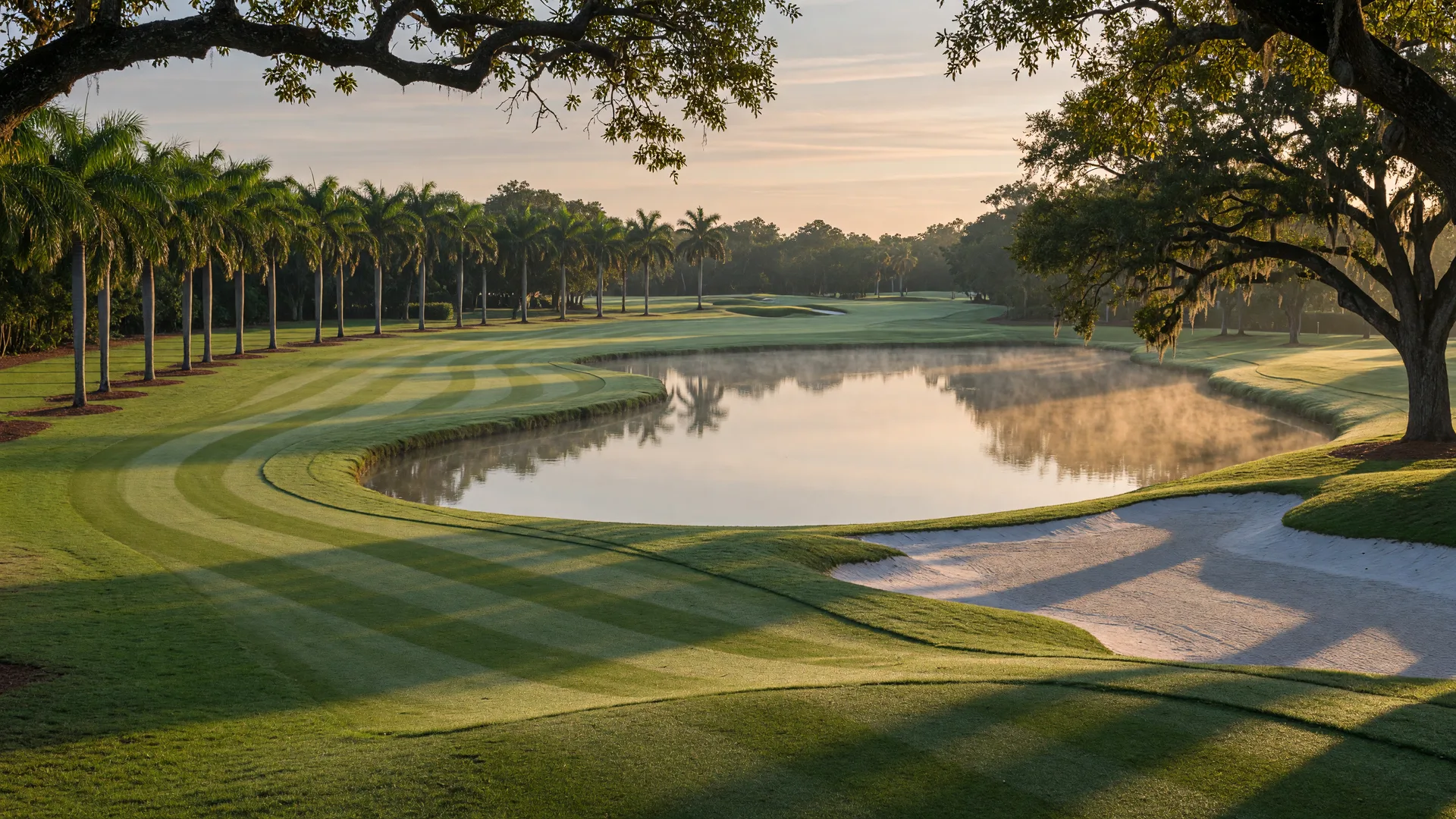
Golf is woven into the fabric of Florida's Gulf Coast in a way few other regions can match. From Sarasota down through Venice, North Port, Port Charlotte, and Punta Gorda, the corridor is lined with courses that range from affordable municipal layouts to semi-private clubs with serious pedigrees. And unlike many golf destinations, you do not need a membership to play well. The public and semi-private scene here is deep, and the prices are more reasonable than most newcomers expect.
What It Costs to Play
The headline number is friendlier than you might think. Across the Sarasota area's public and semi-private courses, weekday 18-hole green fees average around $61, with typical rounds running from roughly $39 to $115. Municipal courses anchor the value end: Bobby Jones Golf Club in Sarasota is city-owned and a favorite for casual golfers, and Lake Venice Golf Club offers an affordable public round in Venice. Capri Isles, also in Venice, is an executive layout that is perfect for seniors and beginners. In Nokomis, Calusa Lakes delivers wide fairways and water features at a mid-range price, and Bradenton's Buffalo Creek is a county-owned course known for good value and a solid pace of play.
Further south, Punta Gorda's Deep Creek Golf Club publishes its fees openly: $89 including cart and tax before 1 PM, dropping to $40 after 4 PM. That kind of transparent pricing is common in the corridor, and twilight rates are a great way to play a full 18 for less.
The Best Public and Semi-Private Courses
The corridor's strongest public options cluster in two spots. Port Charlotte's Riverwood Golf Club earned a spot on Golfers' Choice top 25 public courses in Florida for 2026, and it is joined by Kings Gate, Maple Leaf, and the Port Charlotte Golf Club as semi-private clubs that welcome daily play. In Punta Gorda, the semi-private scene is arguably the best value on the coast: Heron's Glenn ranked number two on Golfers' Choice for 2026, Babcock National landed at number 11, and the Punta Gorda Country Club offers a classic Donald Ross design open to the public. Seminole Lakes and Blue Heron Pines round out a surprisingly deep roster.
The golf guide keeps a course-by-course table of fees, difficulty, and whether each club is genuinely open to the public, so you can build a shortlist before you pack the clubs.
Peak Season vs. Off-Season
Timing is the biggest lever on price. The prime weather window runs from roughly November through April, and the busiest, most expensive stretch is mid-January through mid-March, when snowbirds and seasonal visitors fill the tee sheets. In that window, expect green fees 40 to 60 percent higher than summer at many courses, and book tee times well in advance. Resort courses can run two to three times their summer rates in peak season.
The trade-off is worth understanding. Summer rates at many public courses across the region start around $30, and the courses are far less crowded, but the heat is real, and afternoon thunderstorms are a daily possibility from June through September. Early morning tee times are the secret: you get the best weather, the best pace, and often the best rates.
Membership vs. Daily Play
For full-time residents, the math between daily play and membership deserves a closer look. Daily play is flexible and, at the rates above, affordable if you golf a few times a month. But if you play weekly or more, a semi-private membership can pay for itself, and it usually adds perks: preferred tee times, practice facilities, locker rooms, and a social calendar of leagues and events. Many semi-private clubs in the corridor offer tiered memberships, from weekday-only golf memberships to full social and dining packages.
The decision depends on how often you play and whether the club's social side matters to you. Golfers who want variety often stay on daily fees and rotate through the corridor's public courses, while those who value a home course and a community of regulars lean toward membership. The country-club communities in Venice and Punta Gorda are built around exactly that membership lifestyle, and the Lakewood Ranch guide covers the club options there.
How Golf Fits the Lifestyle
Golf on the Gulf Coast is rarely just golf. The same corridor that produces great courses also produces the region's best beaches, boating, and fishing, which means a weekend can move from a morning round to an afternoon on the water without a long drive. The beach and lifestyle guide and the getting around guide show how the pieces fit together, and the cost of living guide puts golf and membership fees in context with the rest of your budget.
The Next Step
If golf is part of your Gulf Coast plan, start with the golf guide, which lists the courses that are genuinely open to the public and their current fee ranges. Then think about where you want to live around the game: the Sarasota and Bradenton guides cover the northern end of the corridor, and the Punta Gorda guide covers the value end. The right course, like the right community, is the one you will still be excited to play in five years.